

There are records that come out, and then there are records that remind you why Hip-Hop still matters. Sam Krats’ “Emcees Recognise,” featuring Artifacts — El Da Sensei and the late, great Tame One — is one of those records. It does not beg for attention. It does not chase what is trending. It does not try to dress itself up as something it is not. This is Hip-Hop made for people who understand that the microphone is still a responsibility.
Taken from Sam Krats’ double album Culture, “Emcees Recognise” brings that classic boom-bap feeling back to the front. The drums hit. The texture feels dusty in the right way. The energy is raw, but controlled. The production gives the emcees room to breathe, and that is important because when you have Artifacts on a track, you do not need gimmicks. You need space for the bars to work.
For New Jersey Hip-Hop, Artifacts is not just a name. Artifacts is part of the foundation.
El Da Sensei and Tame One gave the culture a sound that represented Newark, graffiti, underground Hip-Hop, and true emcee skill. They came from an era when style mattered. Delivery mattered. Breath control mattered. Having your own voice mattered. You could not just rap over a beat and call yourself great. You had to prove it.
That is what “Emcees Recognise” feels like. It feels like proof.
El Da Sensei comes through with the sharpness people expect from him. His voice carries experience, but it does not sound tired. It sounds seasoned. There is a difference. He knows how to ride the beat without wasting words, and that is something a lot of newer artists should study. He does not have to overperform because his presence is already felt. Then there is Tame One.
Rest in peace to one of Brick City’s true originals.
Hearing Tame One on a record like this hits different now. It is not just nostalgia. It is legacy. Tame had a voice and cadence that could not be copied. He had that street art energy in his rhymes, like every bar had paint on it. He was rugged, clever, unpredictable, and honest in a way that made him stand out. When his voice comes through the track, it reminds you that real artists do not disappear. Their work keeps speaking. That is why this song matters.
“Emcees Recognise” is not just a song title. It is a statement. Real emcees recognize other real emcees. Real producers recognize what voices belong on their beats. Real Hip-Hop listeners recognize when something is made with respect for the culture.
Sam Krats deserves credit here because he understands the assignment. He is not just borrowing a ’90s sound to make something feel old. He is building a bridge. His production connects the feeling of classic Hip-Hop with the present moment. It gives listeners who grew up on records like this something to appreciate, while also giving younger listeners a chance to hear what emceeing is supposed to sound like when the craft is respected.
That is what Culture seems to be about. Not just beats. Not just features. Not just names on a tracklist. Culture is connection. Culture is memory. Culture is the reason a producer from the UK can connect with New Jersey legends and the music still makes sense. Hip-Hop has always traveled. The sound started in the Bronx, but the spirit moved through Newark, Jersey City, Queens, Brooklyn, Philly, London, Bristol, Tokyo, Paris, Toronto, and everywhere else people picked up the mic and told the truth.
This is why Hip-Hop cannot be reduced to algorithms, playlists, and quick numbers. A record like “Emcees Recognise” is not disposable content. It is a reminder that the culture has roots. It has elders. It has students. It has builders. It has people who still care about the difference between rapping and emceeing.
There is a big difference.
Rapping can be entertainment. Emceeing is command. Emceeing is how you move a crowd, sharpen a thought, tell a story, defend your name, and leave something behind. Artifacts came from that school. That is why their music still carries weight.
For New Jersey, this song should be celebrated. We talk a lot about New York when we talk about Hip-Hop history, and rightfully so, but New Jersey has always carried its own flame. Newark especially has produced voices with grit, intelligence, humor, pain, and originality. Artifacts helped make sure Brick City had a place in the underground Hip-Hop conversation, and their influence still reaches artists today.
“Emcees Recognise” is another chapter in that story. The music video gives the record another life because visuals matter. They help people enter the song. They help people feel the moment. For a track like this, the video is not just promotion. It is documentation. It gives fans a reason to stop, listen, remember, and share. That is what Heritage Hip-Hop is built for.
We do not just cover music because it is new. We cover music because it has meaning. We cover artists because their work deserves to be found, heard, studied, and respected. “Emcees Recognise” is the kind of record that reminds us why independent Hip-Hop coverage is still needed. Mainstream platforms may miss moments like this, but the culture cannot afford to.
Sam Krats’ Culture is available now on Bandcamp in vinyl, CD, cassette, and digital formats. For collectors, that matters. For listeners, that matters. For people who still believe music should be owned, supported, and respected, that matters.
So the call is simple: watch the video, listen to the record, support the album, and say rest in peace to Tame One by keeping his name alive the right way.
Not with empty posts.
With listening.
With sharing.
With teaching the next generation who he was.
With making sure New Jersey Hip-Hop history stays in the conversation.
Because when the beat is right, the rhymes are sharp, and the names on the record carry real weight, one thing becomes clear: Emcees recognise emcees.

"Emcees Recognise" Official Music Video:

Taken off the Sam Krats 22-track "Culture" double album available as Vinyl, CD, Cassette and Digital on Bandcamp.
Album Link:
Instagram Links:
Sam Krats: @sam_krats
El Da Sensei: @el_da_sensei
RIP: Tame One & DJ Kaos
Thank you:
Goon Promotion: @aprock_bloglove
#SamKrats #EmceesRecognise #Artifacts #ElDaSensei #TameOne #RIPTameOne #CultureAlbum #NewJerseyHipHop #NewarkHipHop #BrickCityHipHop #BoomBap #UndergroundHipHop #RealHipHop #HipHopCulture #90sHipHop #BandcampHipHop #IndieHipHop #HipHopMusicVideo #HeritageHipHop #HipHopBlog #SupportIndependentHipHop #EmceesRecogniseEmcees #NJHipHop #GoonPromotion

DJ Kwan's Boom Bap Alumni Proves Real Hip-Hop Never Left
Hip-Hop is in a strange place. The culture that once celebrated originality, lyricism, DJing, storytelling, and community has become increasingly driven by algorithms, trends, and moments. Somewhere along the way, many people began repeating the same narrative:
"Boom Bap doesn't make money?" "Do people listen to music anymore?" "Boom Bap is old, and original rap is out dated."
Those statements have become damaging myths and opinions in modern Hip-Hop. The truth is Boom Bap isn't just a sound. Boom Bap is the foundation of Hip-Hop culture itself. Before the streaming era. Before playlists. Before viral dances and social media challenges. There was the beat, the rhyme, and the connection between people. Boom Bap became the language that introduced the world to Hip-Hop and helped establish the culture as a global movement. That foundation is exactly what DJ Kawon celebrates on his debut album, Boom Bap Alumni.
People know DJ Kawon as one-third of The Mic Council and as the creator of The Mixtape Show, a platform dedicated to preserving and celebrating Hip-Hop culture. For years, Kawon has helped amplify artists through interviews, conversations, and media coverage. Now he steps into a different role—not as a commentator on the culture, but as a contributor to it.
In 2025 DJ Kawon won an honor at the Heritage Hip-Hop Awards for his musical production. With Boom Bap Alumni, DJ Kawon transforms from platform builder to executive producer, curator, and cultural architect with his own project. What makes this project special is the way it connects artists across geographical borders while remaining rooted in Hip-Hop's core principles.
The album features emcees from Canada and the United States, bringing together voices from different regions, backgrounds, and experiences. Instead of chasing trends, Kawon focuses on creating chemistry. The result is an album that feels like a Hip-Hop summit meeting where every artist is invited because of skill, not popularity.
That philosophy is evident on the album's first single, Dirty Angels, (by Cold Camp) which introduces listeners to the collaborative spirit that fuels the entire project. Rather than creating records designed to fit neatly into a playlist category, DJ Kawon builds songs that feel like conversations between artists who share a respect for the craft.
Perhaps the most exciting example of this approach is the Boom Bap Alumni Posse Cut.
The posse cut is one of Hip-Hop's most important traditions, yet it has become increasingly rare in today's music landscape. Historically, posse cuts brought together multiple emcees with different styles, voices, and perspectives over a single instrumental. The goal wasn't simply to make a song—it was to create a competitive showcase where artists elevated one another.
For many Hip-Hop fans, posse cuts served as proving grounds where legends were born.
DJ Kawon revives that tradition on Boom Bap Alumni, creating a moment where lyricists stand shoulder-to-shoulder and remind listeners why the art of emceeing still matters.
Throughout the album, listeners will hear strategic pairings that make each record feel unique. Artists from different territories are matched together, creating marquee moments that celebrate diversity within Hip-Hop while maintaining a unified sound. Whether it's solo performances from artists like Notes 82, Acewonda, Tre-Dot, and Travisty The Lazy Emcee or collaborative records featuring multiple artists, Like Len Dor and The BadSeed, every song contributes to the larger vision. And that vision is clear.
Boom Bap Alumni is not trying to recreate the past. It is proving that the values that built Hip-Hop still have a place in its future. The drums knock. The music breathes. The rhymes matter. The listener is invited to pay attention to the words again. In an era where music is often consumed in fragments, DJ Kawon asks listeners to engage with complete songs, complete verses, and complete ideas. The jazzy textures, soulful undertones, and hard-hitting drums evoke the spirit of the early 1990s, but the voices are modern, current, and relevant. That balance is what makes Boom Bap Alumni important. This is not nostalgia. This is preservation. This is continuation. This is Hip-Hop remembering who it is.
As June approaches, Boom Bap Alumni stands as one of the most intriguing independent Hip-Hop releases on the calendar. More than an album, it is a reminder that culture survives when people choose to protect it. DJ Kawon has spent years giving artists a platform. Now he uses that same vision to create one. If Boom Bap Alumni accomplishes anything, it proves that Boom Bap was never dead. It shows us all that the people who love Hip-Hop simply never stopped listening to it. Awaiting memories of what was while celebrating the newness of times past building the culture one brick, one rhyme and one sound, at a time.
Have you heard "Dirty Angels" yet? Watch the official video and tell us if Boom Bap still represents the heart of Hip-Hop culture. Subscribe to Heritage Hip-Hop for more exclusive album reviews, artist interviews, and coverage of the independent artists keeping the culture alive.
Dirty Angels by DJ Kawon featuring Cold Camp:
Boom Bap Alumni will be released on Mad Good Records. 6/28/2026
Media Links:
Instagram:
DJ Kawon: https://www.instagram.com/kawonjmedia/
Madgood Records Bandcamp Page:

#BoomBapAlumni #DJKwan #BoomBap #HipHopCulture #UndergroundHipHop #RealHipHop #IndependentHipHop #GoldenEraHipHop #HipHopCommunity #BoomBapRap #LyricismLives #HipHopBlog #HipHopMedia #TheMixtapeShow #TheMicCouncil #HipHopHistory #HipHopNews #ConsciousHipHop #HipHopWorldwide #CanadianHipHop #EastCoastHipHop #IndependentMusic #PosseCut #BoomBapForever #HeritageHipHop
By Karev of Heritage Hip-Hop
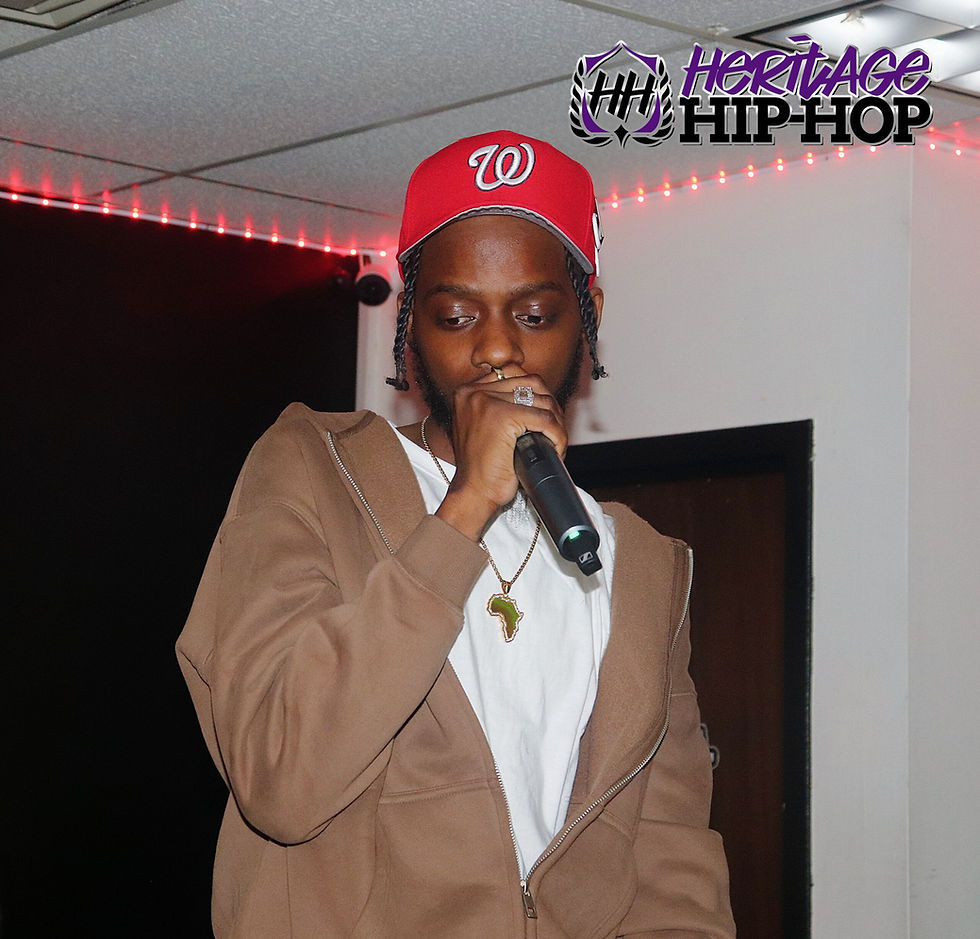
New Jersey Hip-Hop gathered in Newark on May 15, 2026, at 8 Squad Rebel Radio to witness something deeper than another album rollout. J.1.DA’s Zen listening party was not built on shock value, gimmicks, or microwave virality. It was built on honesty.
In today’s music climate, many artists either drown in emotion without direction or hide behind performance so deeply that listeners never truly meet the person behind the music. J.1.DA chooses another route. Zen is an album centered on emotional accountability, growth, fatherhood, spirituality, and presence. It is the sound of a man confronting himself while learning what it means to guide another life. The room reflected the importance of the moment. New Jersey Hip-Hop came out in support with artists and personalities including Stan, Khalidatnight, Leah Jenae, G Valentino, Mikee Mula, I$h K, and Samad Savage in attendance and many others. That support mattered because Zen feels bigger than music. It feels like testimony.
The album opens with the sound of a baby crying. That choice immediately frames the project around life itself. The cry of a newborn represents both a beginning and a responsibility. It is fear, hope, pressure, and purpose entering the world at once. Featuring Karma and produced by G Valentino, the introduction establishes the emotional core of the album: a father dedicating himself to the future standing in front of him.
Where J.1.DA succeeds most is in how he uses his voice. His beat selection never overpowers him. Instead, the production creates space for his tone, reflections, and emotions to lead the music. Every instrumental feels chosen to carry thought rather than distract from it. That restraint allows the listener to sit with the message.
Throughout Zen, J.1.DA examines manhood through a deeply personal lens. Fatherhood becomes more than a life event; it becomes a transformation. The album wrestles with questions many men avoid publicly: What does protection truly mean? Is being physically present the same as emotionally being there? What legacy does a man leave through love, promises, and action? Those themes echo repeatedly through the music.
Love and protection, purpose and vision, presence versus simply being around.
There are moments of self-assurance throughout the album where J.1.DA speaks life into himself while trying to define purpose. One standout dynamic includes the balance between brotherhood and sisterhood on record, giving the album a family-centered emotional texture that many modern releases lack. One of the most powerful aspects of Zen is how it treats generational love. The inclusion of his grandmother creates a spiritual anchor within the project. Her voice represents wisdom passed through bloodlines, while the words of motherhood and fatherhood throughout the album become testimonies of sacrifice, promise, and creation itself. In many ways, Zen argues that family memory is sacred.
The album title itself is important. Zen is commonly associated with mindfulness, meditation, calm awareness, and intuitive understanding. Rather than obsessing over what cannot be controlled, Zen teaches presence within the moment. That philosophy bleeds into the music. J.1.DA is not trying to escape life on this album. He is trying to understand it while standing inside it. That is what makes this project resonate. Zen is not performative spirituality. It is reflective Hip-Hop. It is a man turning responsibility into art. At a time when music often rewards noise over substance, J.1.DA offers something quieter but stronger: intention. New Jersey Hip-Hop has always produced artists capable of balancing lyrical depth with emotional honesty. Zen continues that tradition while giving listeners a project rooted in growth, accountability, and the understanding that maturity itself can be revolutionary. This album does not ask you to worship the artist. It asks you to reflect on yourself. And that may be J.1.DA’s greatest accomplishment.
Zen is available on Streaming platforms now.
Social Media:
J.1. DA: https://www.instagram.com/_j.1.da/
Zen Spotify Link: https://open.spotify.com/album/16jCj1MjUiMEbEYXkThEFb
#J1DA #ZenAlbum #NewJerseyHipHop #NewarkNJ #NJHipHop #HipHopBlog #HeritageHipHop #UndergroundHipHop #ConsciousHipHop #HipHopCulture #J1DAZen #NewarkHipHop #NJRap #HipHop2026 #IndependentHipHop #BoomBap #FatherhoodInHipHop #HipHopJournalism #AlbumListeningParty #KarevOfHeritageHipHop